
THE AI-BRIDGES SYMPOSIUM
Bridging Institutions, Open Knowledge, and AI
28–29 May 2026
Senate House, University of London
In-person & online | Free registration | Open to all
About the Symposium
Institutional data is rich, carefully curated and of immense public value, yet it remains difficult to share, connect and reuse at scale. Open knowledge platforms like Wikidata have shown what’s possible when data is structured and collaboratively maintained, but contributing to them remains hard. At the same time, AI-based platforms are rapidly reshaping how knowledge is accessed, consumed, produced and reshared, often without drawing on the structured, open, and community-governed data that institutions and Open Knowledge communities have built over decades.
The AI-BRIDGES Symposium brings together the people working to change this: Institutions, Open Knowledge communities, Technologists, Researchers and funders, for two days of hands-on learning, expert dialogue and collaborative problem-solving.
This is not a conference about what could be done; It is a gathering for people ready to do it.
Programme
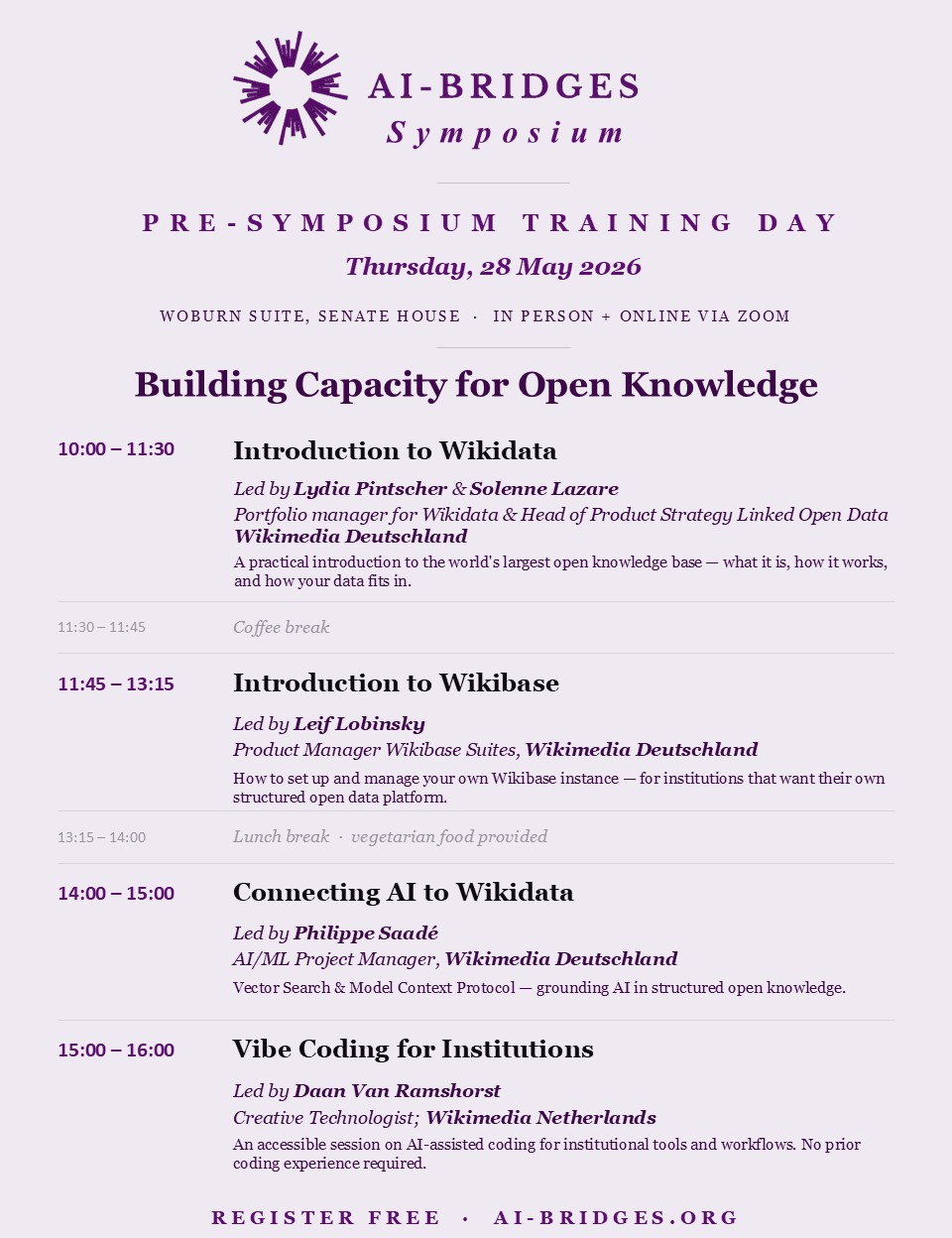
Day 1: Thursday, May 28, 2026
Pre-Symposium Training Day: Building Capacity for Open Knowledge
A full day of practical, hands-on workshops designed for institutions and practitioners who want to engage with Wikidata, Wikibase and emerging AI-driven tools for working with Institution data in Open Knowledge platforms. Whether you are new to Linked Open Data or looking to deepen your practices, this day is built to help you take the next step. The workshops will be led by senior developers and product leads from Wikimedia Deutschland, including members of the Wikidata and Wikibase teams, alongside specialist practitioners from across the Wikimedia movement. All sessions will be recorded and made available publicly as part of AI-BRIDGES’s commitment to open knowledge and capacity building.
Day 2: Friday, May 29, 2026
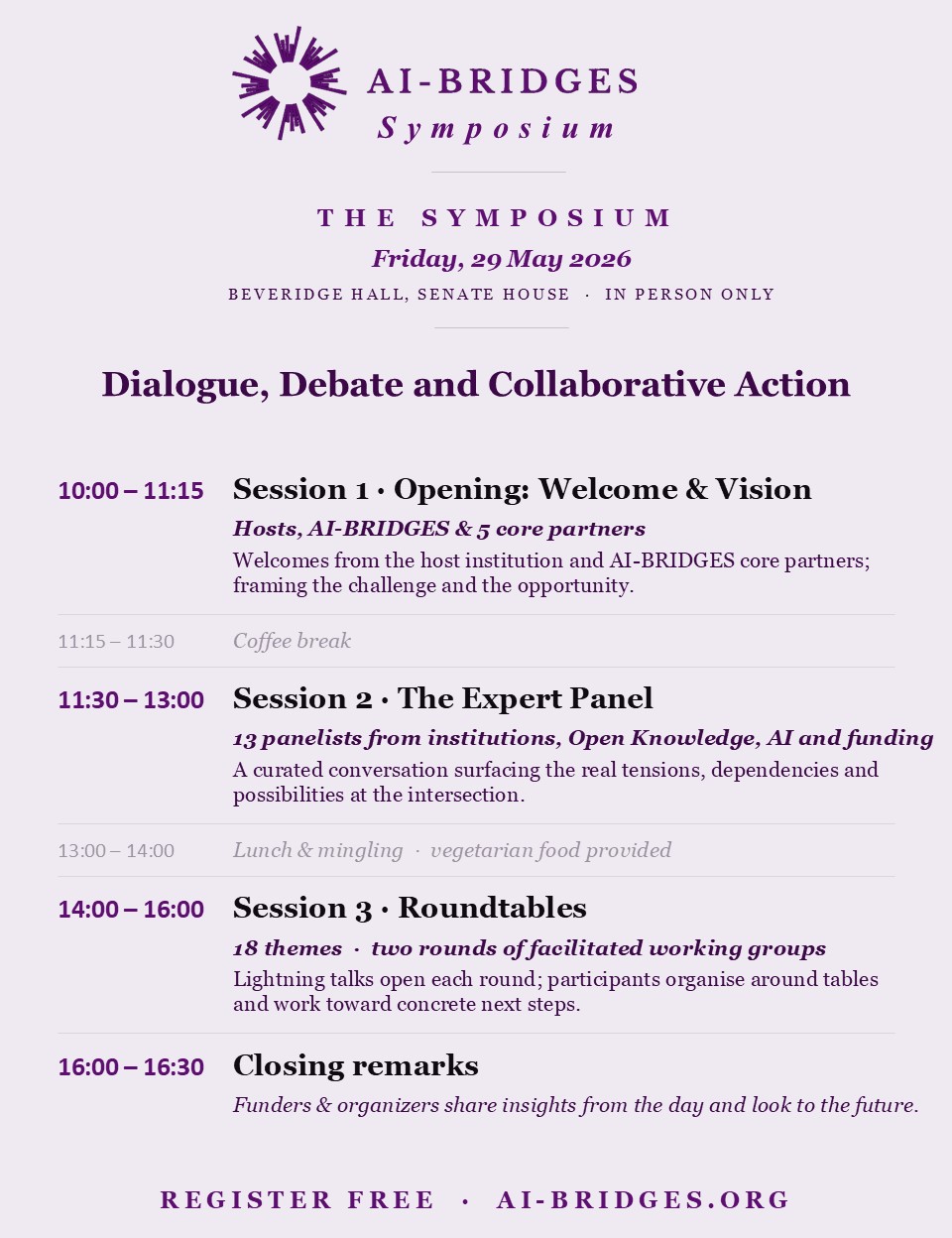
The Symposium: Dialogue, Debate and Collaborative Action
The main symposium day brings the full ecosystem into one room: people who steward institutional data; people who build and maintain open knowledge platforms; people who develop AI systems; people who research these intersections; and people who fund this work. The day is designed to move from shared understanding to shared action.
Please note all sessions, with the exception of the roundtables (session 3), will be recorded and made available publicly as part of AI-BRIDGES’s commitment to open knowledge and capacity building. Session 3’s outputs will also be made available, though not in a recorded form, due to the nature of the session.
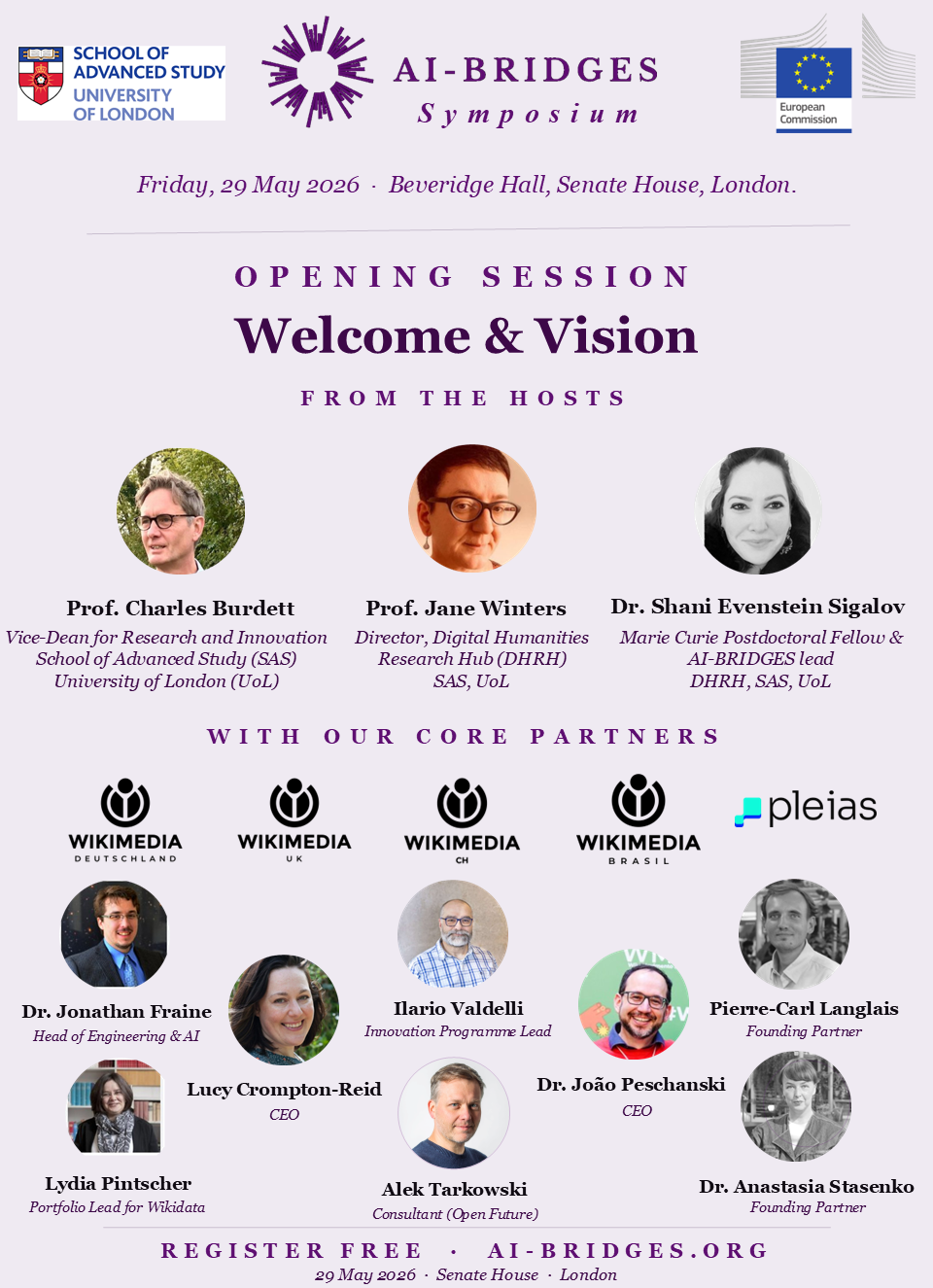
Session 1) Opening Session: Welcome & vision
The symposium opens with welcomes from the host institution, AI-BRIDGES lead & core partners, setting the stage for the day. This session frames the challenge, i.e. why institutions, Open Knowledge communities and AI systems still operate in silos; as well as the opportunity, what becomes possible when we deliberately bridge them.
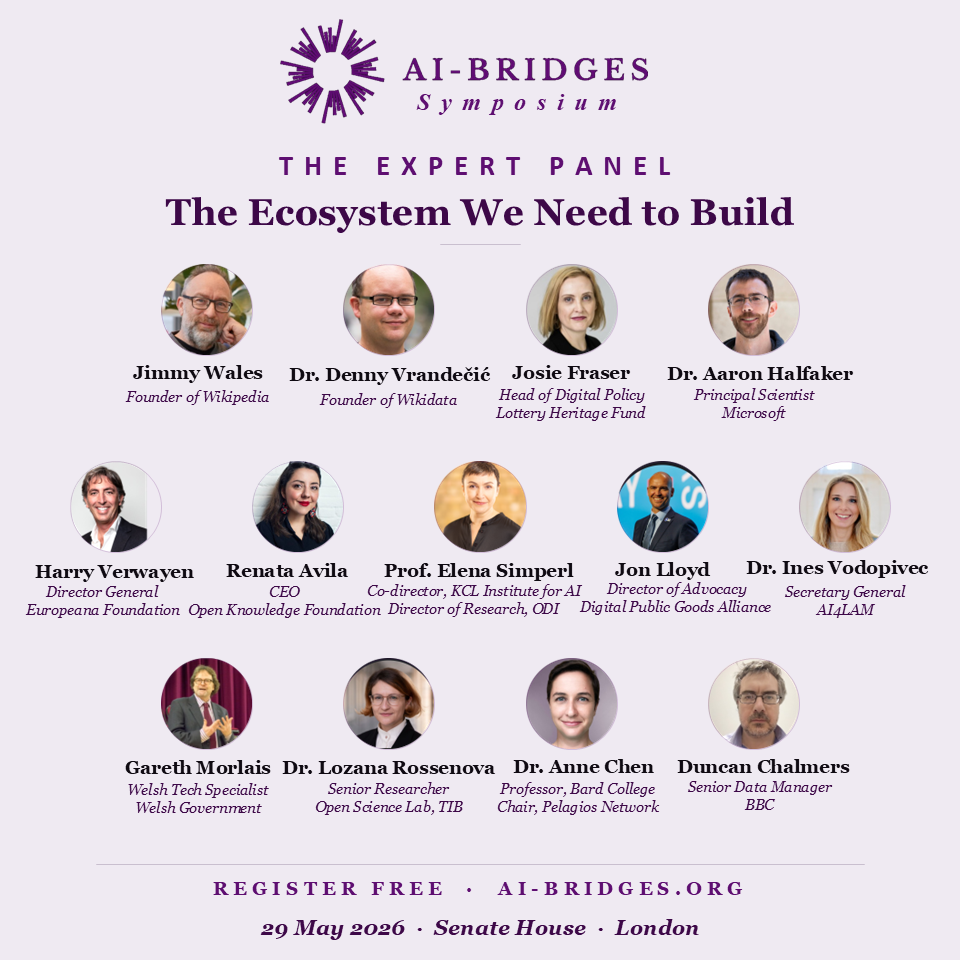
Session 2) Expert Panel: The ecosystem we need to build
A curated conversation between leaders from across the ecosystem. This session does not focus on showcasing individuals / individual projects, but to surface the real tensions, dependencies, and possibilities that emerge when institutions, Open Knowledge platforms, AI developers and funders try to work together.
The panel is deliberately diverse and comprehensive: it includes voices from the Open Knowledge movement, Academia, Cultural heritage, Government, civil society, Big Tech and funding bodies. The goal is not consensus, but clarity, including honest discussion about what is not working and why.
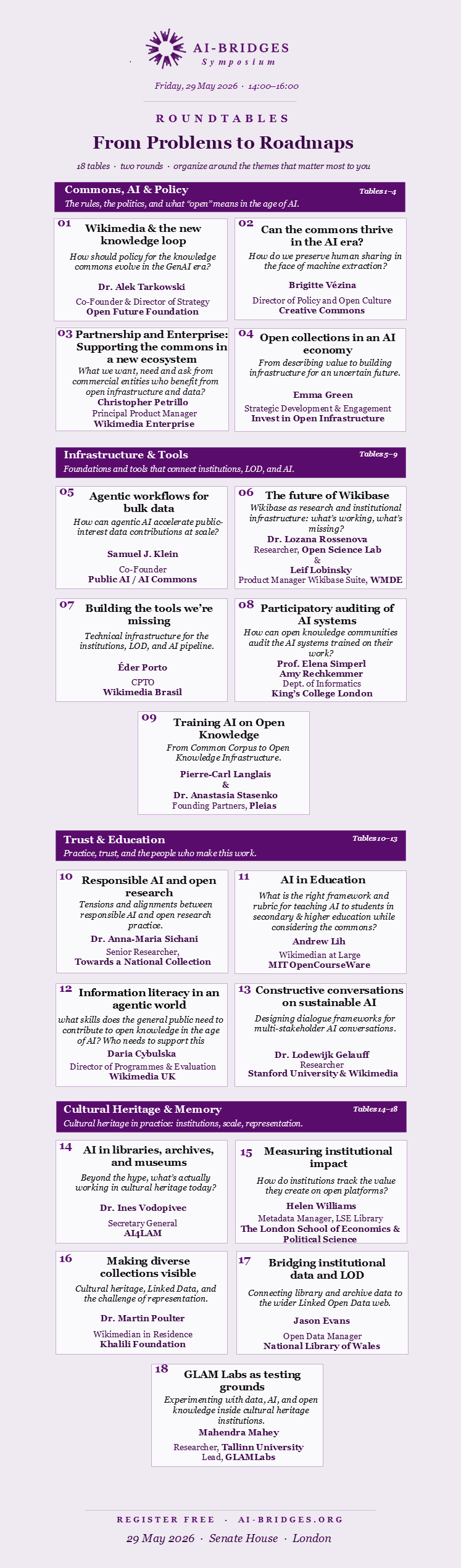
Session 3) Roundtables: From Problems to Roadmaps
The final session turns dialogue into action. Through two rounds of facilitated roundtables, representatives from institutions, researchers, Open Knowledge practitioners, technologists and funders sit at the same roundtables, working collaboratively on solutions to real, shared challenges.
The session will begin with very short lightning talks (1 minute each) by various roundtable leaders, with each identifying a specific problem and inviting others to help think it through.
Participants then organize around the tables that matter most to them — capped at roughly 10-15 per table to keep discussion focused and productive — and work together toward mini roadmaps that include concrete next steps, potential collaborations and shared priorities.
With two rounds of 40 minutes each, every participant has the chance to contribute to two different conversations. Rather than delivering polished outputs on the day, the goal of this session is to foster understanding and create the conditions for future collaboration and next steps.
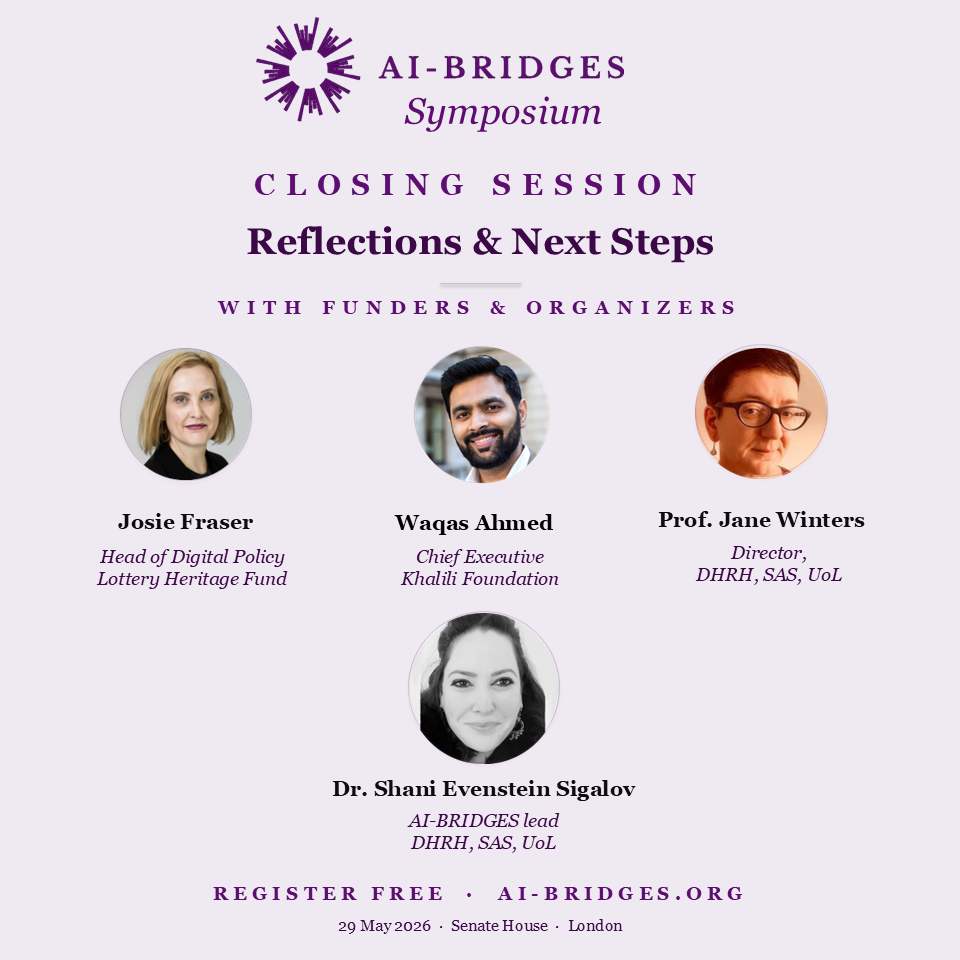
Session 4) Closing remarks
Wrapping up the day, we will be hearing from various funders that will be at the event, as well as from the Symposium organizers, who will be sharing insights gained during the day as well as reflections on next steps and the future of the ecosystem.
Who Should Attend
Institutional practitioners: from cultural heritage, academia, government, and civil society, who steward data and want to make it more openly accessible and connected.
Open knowledge advocates and practitioners: especially those working with Wikidata, Wikibase, and Linked Open Data, who are navigating questions of scale, sustainability, and engagement with AI.
Technologists and AI researchers: working on language models, knowledge graphs, NLP, or open-source AI, who want to explore how structured, community-governed data can ground and improve AI systems.
Researchers: across digital humanities, information science, data governance, and related fields, who are interested in the intersections of institutions, open knowledge, and AI.
Funders and policymakers: who support research, public knowledge infrastructure, or digital public goods, and want a grounded view of where this ecosystem is heading and where investment can make a lasting difference.
Practical Information
Dates: May 28–29, 2026
Venue: Senate House, University of London, Malet Street, London WC1E 7HU
Day 1 (Training): Woburn Suite (limited capacity, 60 in-person + online via Zoom)
Day 2 (Symposium): Beveridge Hall (up to 300 participants, in-person)
Cost: Free to attend. Registration required.
Recording: All sessions will be recorded and shared publicly.
About AI-BRIDGES
AI-BRIDGES (AI-Driven Bridging of Resources and Integration of Data Governance in Educational & Cultural Heritage Systems) is a research-driven, collaborative project hosted at the Digital Humanities Research Hub, School of Advanced Study, University of London, and funded by the European Commission through a Marie Skłodowska-Curie Postdoctoral Fellowship.
The project is led by Dr. Shani Evenstein Sigalov, an educator, researcher, and long-standing Open Knowledge advocate. AI-BRIDGES works with a network of core partners and collaborators spanning Wikimedia chapters, open-source AI developers, universities, libraries, governments, and international organizations.
Learn more: https://ai-bridges.org
Contact: contact@ai-bridges.org