
The AI-BRIDGES Symposium
Bridging Institutions, Open Knowledge, and AI
May 28-29, 2026 * Senate House, University of London.
Registration is now open.
About the event
Institutional data is rich, carefully curated and of immense public value, yet it remains difficult to share, connect and reuse at scale. Open knowledge platforms like Wikidata have shown what’s possible when data is structured and collaboratively maintained, but contributing to them remains hard. At the same time, AI-based platforms are rapidly reshaping how knowledge is accessed, consumed, produced and reshared, often without drawing on the structured, open, and community-governed data that institutions and Open Knowledge communities have built over decades. The AI-BRIDGES Symposium brings together the people working to change this: Institutions, Open Knowledge communities, Technologists, Researchers and funders, for two days of hands-on learning, expert dialogue and collaborative problem-solving.
Register now to secure your place:
Day 1: Thursday, May 28, 2026
A full day of practical, hands-on workshops for institutions and practitioners who want to engage with Wikidata, Wikibase, and emerging AI-driven tools for open knowledge. Led by senior members of the Wikidata and Wikibase teams at Wikimedia Deutschland and specialist practitioners from across the Wikimedia movement.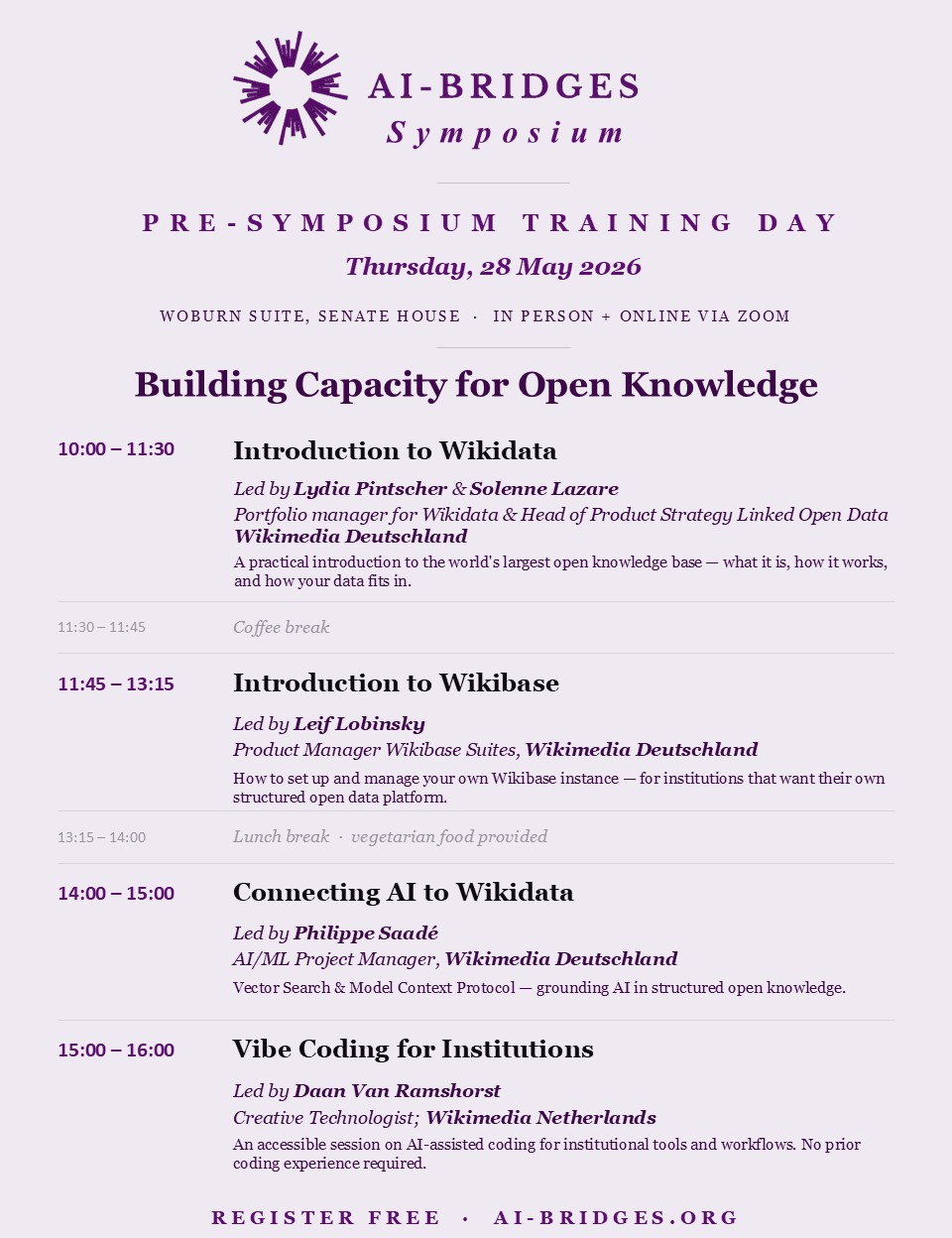
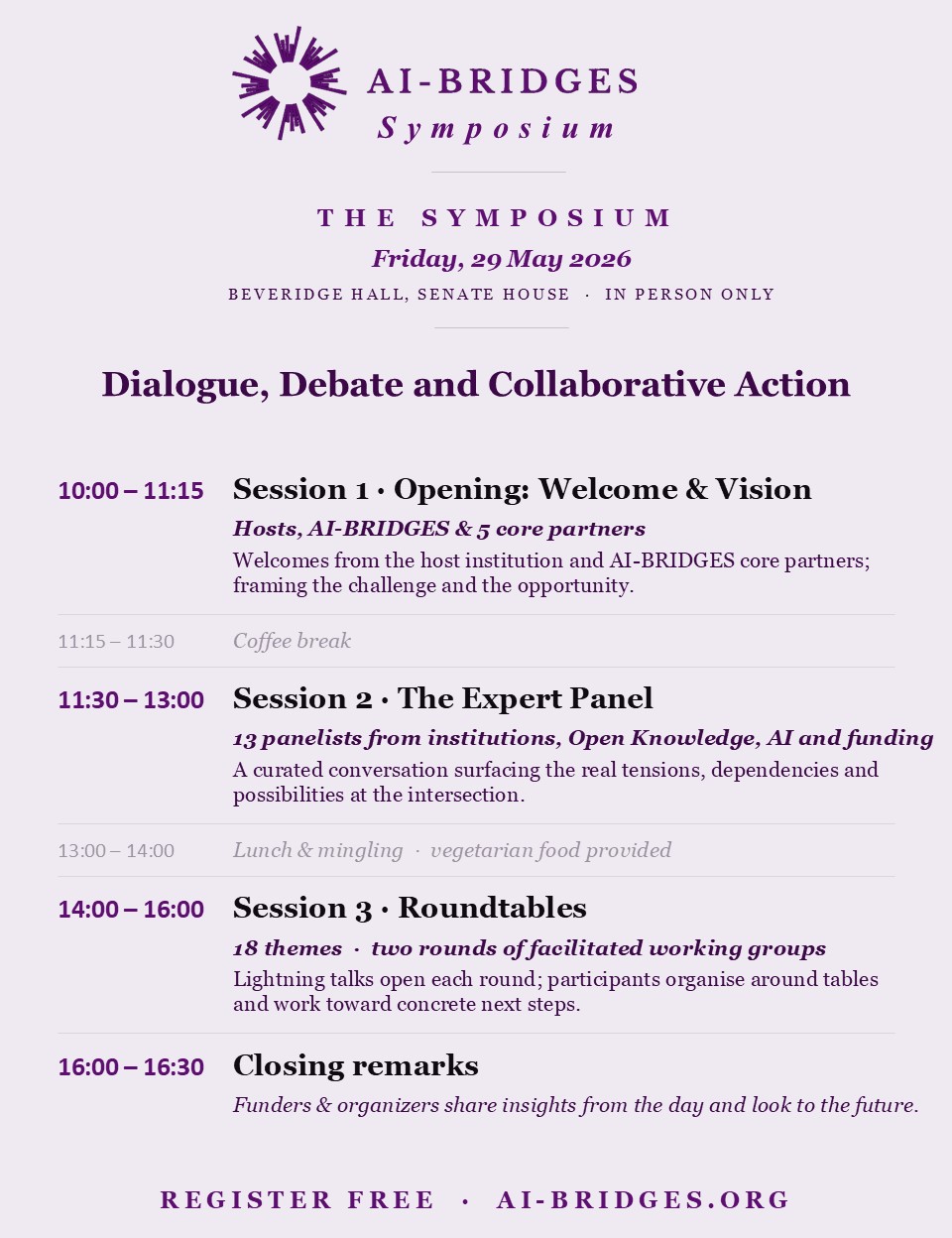
Day 2: Friday, May 29
The main symposium day brings the full ecosystem into one room: people who steward institutional data; people who build and maintain open knowledge platforms; people who develop AI systems; people who research these intersections; and people who fund this work. The day is designed to move from shared understanding to shared action.
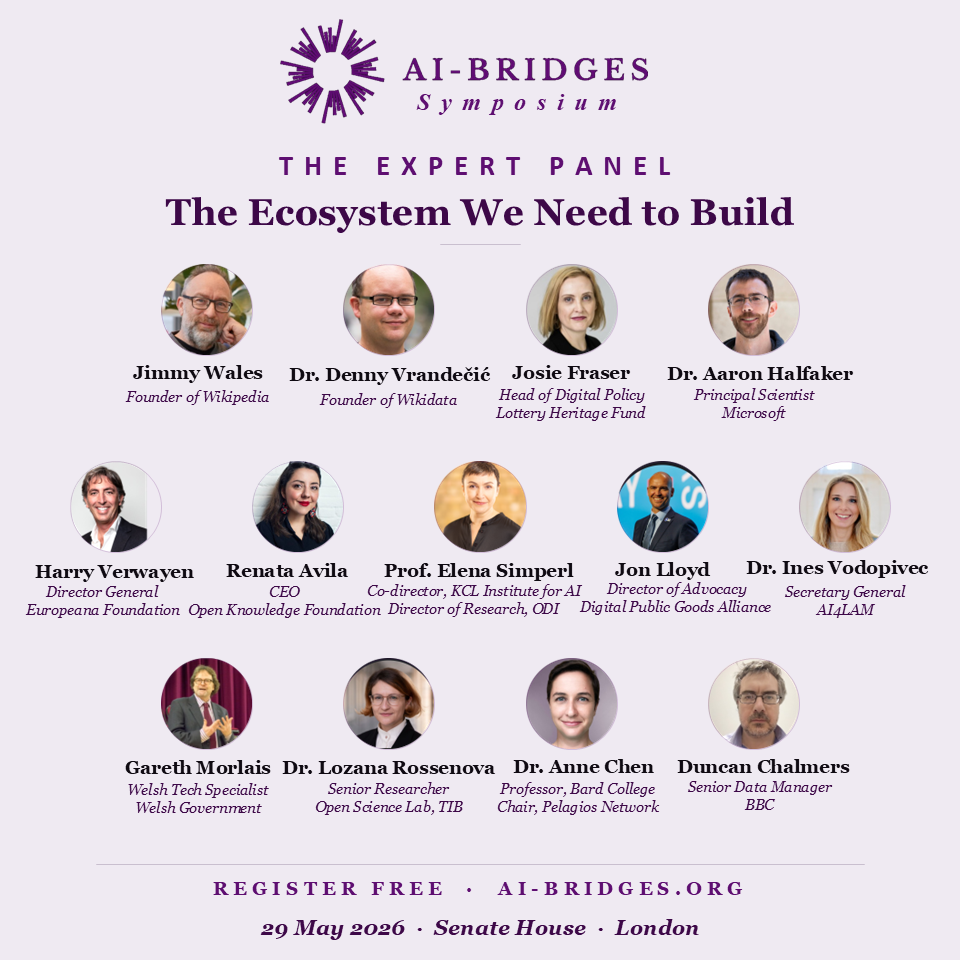
Experts Panel: The ecosystem we need to build
A curated conversation between leaders from across the ecosystem, surfacing real tensions, dependencies and possibilities at the intersection of institutions, open knowledge, and AI. The panel is deliberately diverse, bringing together voices from the Open Knowledge movement, Academia, Cultural Heritage, Governments, Technology, and Funding bodies, highlighting that the challenges we face cannot be addressed from any single perspective alone.
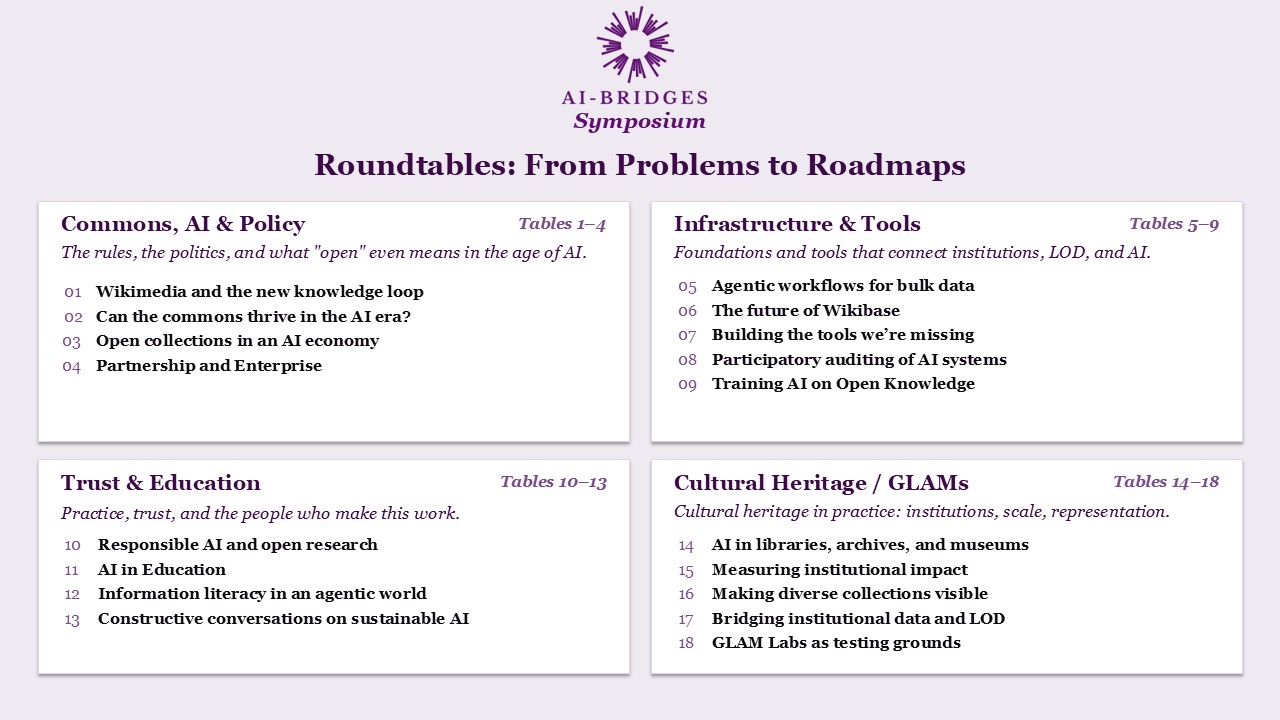
Roundtables: From problems to roadmaps
The final session turns dialogue into action. Through two rounds of facilitated roundtables, representatives from institutions, researchers, Open Knowledge practitioners, technologists and funders sit at the same roundtables, working collaboratively on solutions to real, shared challenges. Rather than delivering polished outputs on the day, the goal of this session is to foster understanding and create the conditions for future collaboration and next steps.
Roundtables are led by practitioners from organisations such as the Creative Commons, Open Knowledge Foundation, Open Future, Public AI, AI4LAM, Invest in Open Infrastructure, GLAMLabs, King’s College London, Khalili Foundation, the National Library of Wales, LSE Library, Wikimedia UK, Wikimedia Brasil, and Wikimedia Brasil.
Topics range from policy frameworks for open data in the age of GenAI, to funding models for open knowledge infrastructure, to building the technical tools we’re still missing. A brief depiction of main categories is here:
For a full list of roundtable topics and leaders, see the full programme.
Who should attend
- Institutional practitioners: from cultural heritage, academia, government, and civil society, who steward data and want to make it more openly accessible and connected.
- Open knowledge advocates and practitioners: especially those working with Wikidata, Wikibase, and Linked Open Data, who are navigating questions of scale, sustainability, and engagement with AI.
- Technologists and AI researchers: working on language models, knowledge graphs, NLP, or open-source AI, who want to explore how structured, community-governed data can ground and improve AI systems.
- Researchers: across digital humanities, information science, data governance, and related fields, who are interested in the intersections of institutions, open knowledge, and AI.
- Funders and policymakers: who support research, public knowledge infrastructure, or digital public goods, and want a grounded view of where this ecosystem is heading and where investment can make a lasting difference.
Practical Information
Dates: May 28-29, 2026.
Venue: Senate House, University of London, Malet Street, London WC1E 7HU.
- Day 1 (Training): Woburn Suite, G22/26, Ground Floor, Senate House – up to 50 in person + online via zoom.
- Day 2 (Symposium): The Beveridge Hall, Ground Floor, Senate House – up to 300 participatns, in person.
Cost: Free to attend. Registration required.
Registration deadline: May 21th, after which it would not be possible to secure tickets.
Recording: Most session (with the exception of the roundtables) will be recorded and shared publicly.
Join us at Senate House
Registration is free and open to all.
Questions? Contact us at contact@ai-bridges.org.